
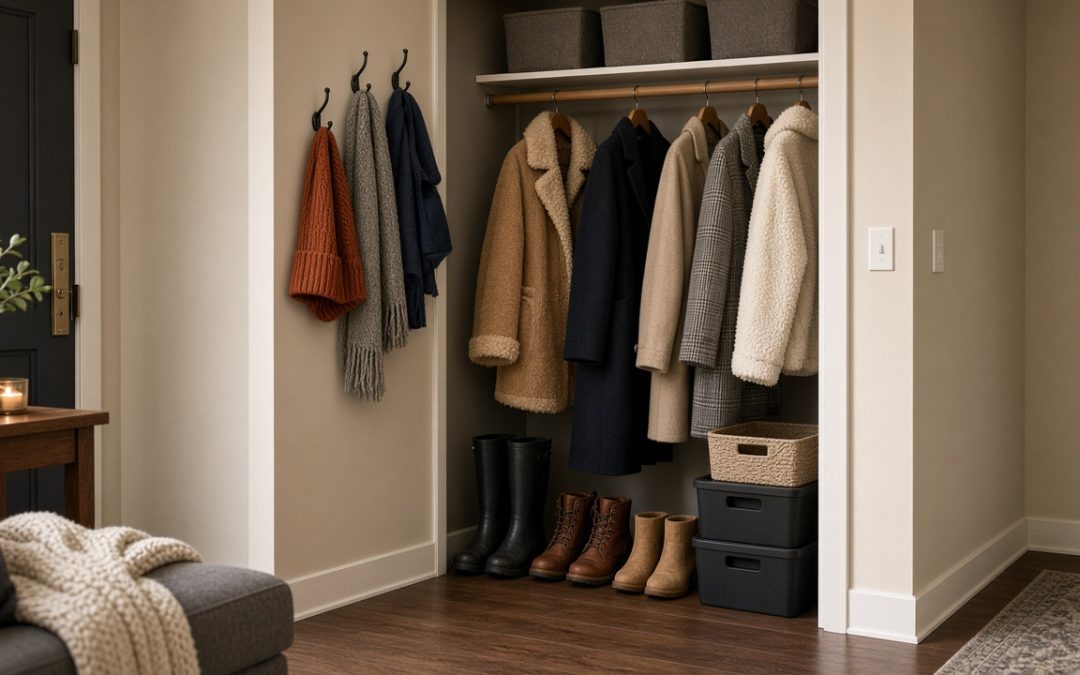
Twin Cities apartments are built for efficiency: compact closets, limited entry space, and no garage for the snow boots and parkas Minnesota winters demand. When summer t-shirts give way to wool, down, and waterproof layers, square footage stays the same while bulk doubles. The goal is not a bigger apartment on day one—it is using vertical space, hidden zones, and habits that keep mud, salt, and damp fabric from taking over your living room. These storage ideas fit renters and owners alike, with options that range from no-drill fixes to layout choices worth considering the next time you move.
Think in Zones: Wet, Daily, and Deep Storage
Winter gear behaves differently depending on how often you wear it and whether it comes home wet. Split storage into three zones so clutter does not migrate to the couch.
Wet zone sits closest to the door: boot trays, a small mat, hooks for damp scarves, and a place for umbrellas. This is where snow melts and road salt stays contained.
Daily zone holds the coat you wear five days a week, one pair of go-to boots, hat, and gloves. Everything here should be grab-and-go without opening boxes or digging through bins.
Deep storage is for sweaters you rotate, spare base layers, guest mitts, and off-season transitions. It can live farther from the entry—in a closet top shelf, under-bed bins, or an ottoman—because you access it weekly, not hourly.
When each category has a home, you spend less time draping jackets on dining chairs—a pattern that makes small spaces feel smaller fast.
Maximize Entry and Hallway Without Renovating
Most leases allow removable hooks, tension rods, and freestanding furniture. Over-the-door organizers on the coat closet or bedroom door add tiers for scarves, thin gloves, and folded knits without sacrificing hanger rod space for heavy coats.
A slim hall tree or vertical coat rack with a weighted base uses footprint you already walk past. Look for models with a lower shelf or basket for boots; pairing with a boot tray underneath catches slush before it hits flooring.
If your apartment has a narrow alcove near the door, a shallow wall-mounted shelf with hooks underneath creates a mini mudroom. Baskets on the shelf hide hats; hooks take bags and coats. Command-brand or similar removable hook systems work on painted walls when weight limits are respected—check labels for heavy wet wool coats and distribute load across several hooks.
For studios where the “entry” is the whole room, a folding screen or open bookshelf placed behind the door visually separates sleeping and living areas from the drop zone. Store daily outerwear on the back side of the unit facing the door so you do not walk past a wall of nylon every morning.
Closets: Vertical, Sorted, and Seasonally Rotated
Standard apartment closets are deep but short on linear hanging space. Double hang rods—one high for long coats, one lower for shorter jackets—instantly double capacity if ceiling height allows. Add slim velvet hangers so sweaters and shirts do not slide off and bulk is reduced compared to plastic.
Use clear bins or labeled fabric boxes on the top shelf for sweaters you are not wearing this week. Fold knits loosely so shoulders do not stretch; avoid overstuffing, which makes stacks tumble when you pull one piece.
Floor space under the hanging rod is prime boot real estate. Boot shapers or rolled magazines inside shafts help tall boots stand upright; flat ankle boots nest in a row on a low boot rack. Keep a small desiccant packet or dry newspaper in bins if boots go away damp—mold in a closet is harder to fix than preventing it.
Under-bed storage with low profile wheeled bins holds out-of-rotation winter layers and spare bedding. If bed height is minimal, bed risers (check lease rules) add inches that matter over a six-month season.
Sweaters Without Stretching or Pilling
Sweaters need air and stable folds more than they need hanger shoulders. Dedicated sweater cubes on closet shelves or in cubby units keep stacks visible. One cube per weight category—light merino, heavy cable, work fleece—speeds morning choices.
If drawer space exists in a dresser, roll lightweight layers vertically so you see each piece in a row. Avoid hanging heavy wet wool; dry flat on a rack before returning to storage.
Packing cubes are not just for travel. Use them inside drawers to separate long underwear, socks, and thin midlayers so winter “basics” do not mix with summer gym clothes still waiting for donation.
Boots, Salt, and Floor-Friendly Habits
Boots are the messiest part of winter storage. A boot tray with a raised lip at the door is non-negotiable in Minnesota apartments with carpet or light-colored tile. Stack trays if you have multiple pairs; pebbled surfaces help scrape soles.
When boots are dry, move them to the closet floor or a ventilated rack—not back in the tray with fresh snow from the next storm. A small fan on low near the wet zone dries liners faster than closed closets.
Keep a old towel or microfiber mat in the entry for wiping paws if you have pets; it doubles as a quick wipe for boot shafts before storage.
Furniture That Earns Its Footprint
Ottomans with hollow interiors store gloves, neck gaiters, and dog leashes. Bench seating at the foot of the bed can hold lidded bins for rarely used gear. Avoid storing leather goods in completely sealed plastic long term; breathable bins or cloth bags prevent odor.
Over-the-sofa organizers with pockets work in studios for remotes and also fit rolled beanies and thin accessories if closet space is zero.
When shopping for a new apartment with Tycon Companies or any provider, ask about closet dimensions, entry layout, and whether units include coat closets or in-unit storage lockers. A floor plan with a defined entry alcove often beats a slightly larger studio with no place to drop winter gear.
Declutter Before You Store
Each fall, retire duplicate scarves, gloves with missing mates, and coats that no longer fit. Donate before storage season so bins are not full of items you will never wear. One in, one out for new purchases keeps small closets from bursting by February.
Vacuum bags compress bulky parkas for true off-season storage in spring, but only when garments are clean and fully dry; compression long-term can stress down baffles if overpacked.
FAQ
How do I store winter gear in a studio with no coat closet?
Use a freestanding coat rack or wall hooks near the door, under-bed bins for rotation, and over-door organizers for accessories. A room divider creates a visual entry zone. Keep daily items on hooks; store extras in labeled bins elsewhere in the unit.
Are over-the-door hooks safe for heavy winter coats?
When installed per manufacturer weight ratings and spread across multiple hooks, yes. One hook for a soaked parka may fail. Use two hooks for heavy items, prefer studs or solid-core doors when possible, and check removable adhesive hooks monthly in humid seasons.
What is the best way to dry boots in a small apartment?
Remove insoles, blot excess moisture, and stand boots in a tray near airflow—a fan helps. Avoid direct heat on leather. Once dry, move boots to closet storage so the entry tray stays ready for the next snowy day.
Should sweaters be hung or folded in apartment closets?
Fold heavy knits and stack on shelves or in cubes. Hang only lightweight or structured knits on padded or wide hangers. Hanging wet or heavy wool stretches shoulders and ruins shape over one Minnesota winter.
Can I use balcony or patio storage for winter items?
Only if your lease allows it and items are in weatherproof, sealed containers. Extreme cold and moisture damage leather and electronics. Most renters keep daily gear inside; balconies suit empty bins or sports equipment if permitted, not primary coat storage.
Recent Comments